
COMPLETED PROJECT / Malaysia
Windlass repair
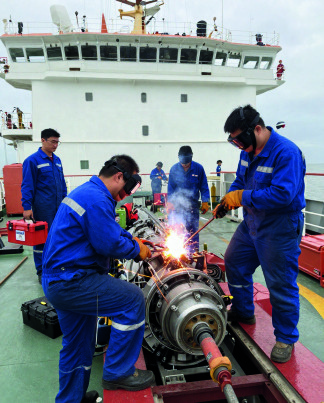
Shore crane removal, remachining of a spare bushing to restore design tolerance, onboard reassembly and testing before return to service.
THE REQUIREMENT
Repair of a port side windlass in Malaysia.
The requirement
The port side windlass required repair in Malaysia. The scope included removal of the windlass, machining work on a spare bushing and subsequent onboard reassembly. The bushing needed to be remachined to restore the design tolerance.
This made the dimensional condition of the component a central part of the repair. Reassembly was not simply a matter of fitting an unmodified spare.
Removal, machining and reassembly
Shore crane support was used to remove the port side windlass. The spare bushing was then remachined to restore its design tolerance before the equipment was reassembled onboard. Testing followed before return to service.
The scope connected lifting support, machining and onboard work. Those stages depended on one another: the removal arrangement enabled the repair activity, while the machining requirement had to be addressed before the reassembly stage.
Technical significance
A bushing repair is concerned with the component’s fit within its assembly. Restoring the specified tolerance addresses the interface involved in the work. It is a more precise repair description than a generic statement that the windlass was serviced.
The completed project demonstrates a coordinated mechanical repair route from equipment removal through dimensional restoration and final testing.
Why bushing tolerance affects the repair
A bushing provides a defined bearing interface within the mechanical assembly. Excessive clearance can allow unwanted movement and uneven loading, while insufficient clearance can interfere with rotation or the intended lubrication film. Repair decisions therefore depend on the applicable drawing dimensions and fit, rather than simply the outside appearance of the spare.
The project required remachining a spare bushing to restore its design tolerance. That makes the machining stage an essential interface between the removed equipment and the onboard reassembly. A nominally available spare was not sufficient without the dimensional work.
Workshop and onboard stages have different dependencies
Removal with shore crane support provides access for the repair route, but machining and reassembly have to remain connected to the same equipment identity and dimensional requirement. During reassembly, positioning and alignment matter alongside the repaired component.
Testing before return to service formed part of this project. The checks applicable to a windlass depend on the repaired mechanism and the maker’s procedure; brake, clutch or hydraulic checks should not be represented as completed tests unless they are included in the actual service records.
Return to selected projects →