COMPLETED PROJECT / Damietta, Egypt
Duct keel cleaning in Damietta
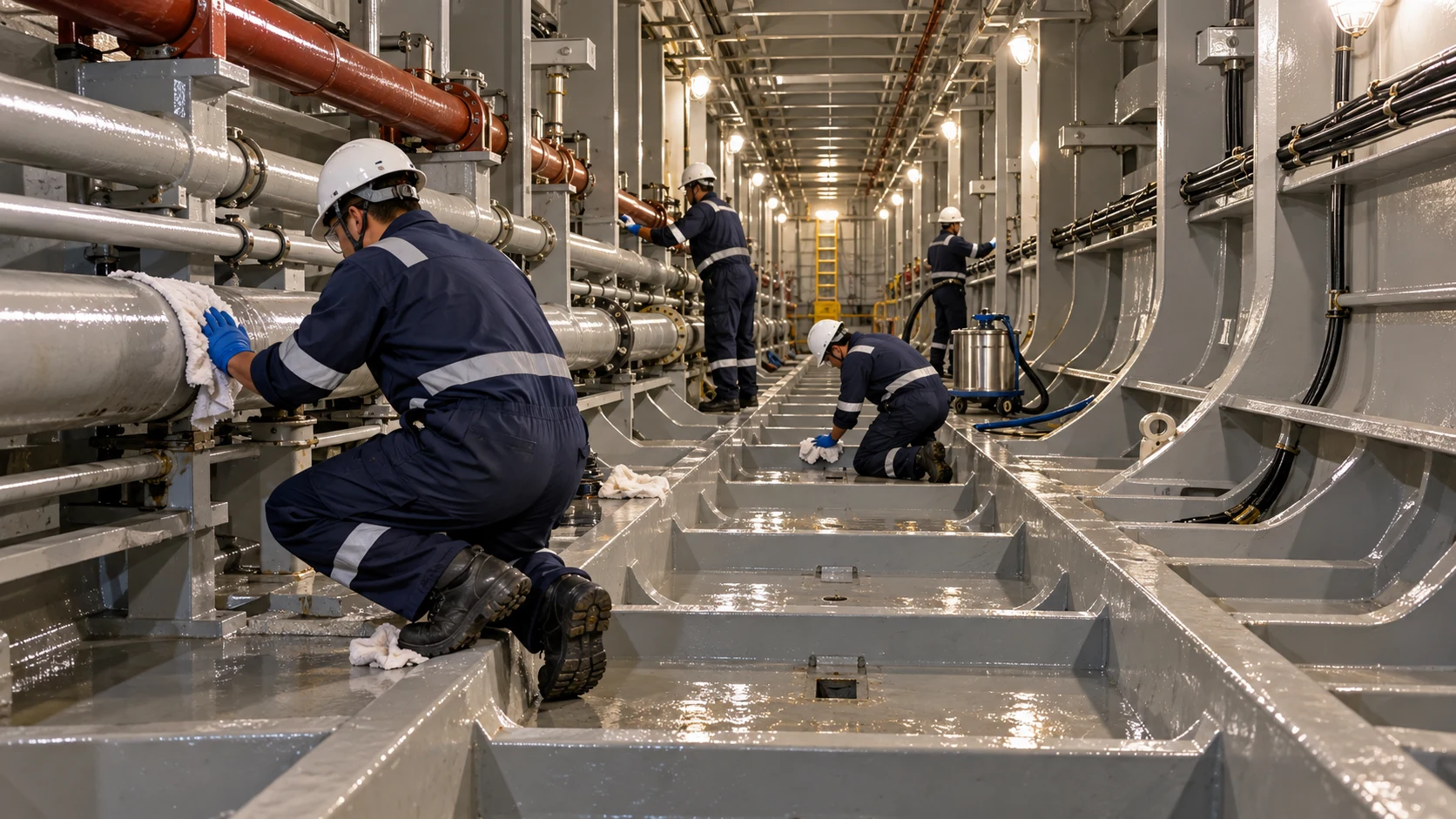
Manual removal of accumulated sludge across a 90 metre duct keel, with additional tank top and engine room floor cleaning.
THE REQUIREMENT
Manual removal of accumulated sludge across a 90 metre duct keel, with additional tank top and engine room floor cleaning.
A defined cleaning scope within a vessel support window
MSACHKL supported duct keel cleaning aboard M/V PROPEL WEALTH at Damietta Port, Egypt, between 8 and 12 August 2026. The work concerned an approximately 90 metre long space, around 4 metres wide, with accumulated sludge requiring manual removal.
The scale of the space made this a labour intensive cleaning requirement. A team of 10 to 12 personnel worked on the scope, with approximately 0.5 to 0.75 m³ of sludge removed. These figures describe the physical work involved rather than a routine surface wash.
Manual removal and surface cleaning
The recorded process combined manual cleaning with an initial diesel oil cleaning stage followed by oil spill dispersant and cleaning chemicals. Chemicals and rags were supplied from the workshop for the operation.
Manual removal addressed the accumulated material, while the subsequent cleaning stages addressed the remaining contamination on the worked surfaces. The sequence is specific to this project; cleaning products and methods for other vessels need to suit the actual residue, surface materials and approved onboard arrangements.
Additional areas identified by the vessel
The scope also included dirty areas of the tank top and engine room floor identified by the vessel. This extended the cleaning activity beyond the duct keel and brought the additional areas into the same attendance.
The project demonstrates the value of defining both the principal space and related cleaning requirements. A long internal space, accumulated sludge and additional machinery area surfaces require different attention from a simple washdown request.
The execution value
The completed work combined local manpower, workshop supplied consumables and a clearly identified onboard cleaning scope. It provides a practical example of MSACHKL supporting vessel maintenance requirements in Egypt.
For similar requirements, the starting information is the space dimensions, photographs, residue description, access arrangements and available working window. Those details allow the cleaning scope and attendance resources to be considered together.
Access, atmosphere and the working environment
A duct keel can present restricted access, long travel distances and limited natural ventilation. IMO’s enclosed space recommendations make risk assessment, entry controls, atmospheric testing and rescue readiness central considerations for spaces falling within that definition. The cleaning activity itself can change the atmosphere through vapours, residue disturbance and the introduction of cleaning materials.
For this project, the approximately 90 metre length and manual work scope explain why manpower and consumables were material parts of the arrangement. Access and the condition of each work area are also important to how cleaning personnel move equipment and remove accumulated material.
Bulk removal before attention to remaining contamination
Approximately 0.5 to 0.75 m³ of sludge represents accumulated material to be physically removed. It is different from a surface stain or a small oil film. After manual removal, cleaning the worked surfaces deals with contamination left on the structure rather than merely redistributing the original sludge.
The actual sequence used diesel oil initially and then dispersant and chemicals. This recorded sequence should be understood in the context of the vessel’s work arrangements, ventilation and waste handling. It is not a universal prescription for cleaning every duct keel.
Connecting related spaces to the same attendance
Tank top and engine room floor areas identified by the vessel were included in the work. These additional surfaces had to remain connected to the overall attendance so the principal duct keel requirement and the supplementary cleaning were treated as one scope.
The result is a case study of local execution: a defined internal space, a recorded residue quantity, a 10 to 12 person team and workshop supplied consumables, with additional vessel identified areas addressed during the same operation.
TECHNICAL REFERENCE
IMO: Enclosed space recommendations ↗