
COMPLETED PROJECT / Netherlands
9 ton anchor replacement
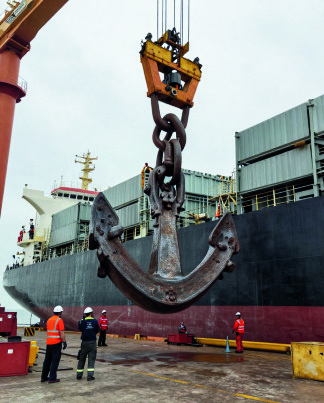
Lift planning and replacement using a 55 ton crane vessel, with recovery of the existing assembly and reconnection through a kenter shackle.
THE REQUIREMENT
Replacement of a 9 ton anchor assembly in the Netherlands.
The requirement
The vessel required replacement of a 9 ton anchor assembly in the Netherlands. The work brought together replacement equipment, recovery of the existing assembly and reconnection to the vessel’s anchor chain. It was a handling and installation operation as well as a supply requirement.
The scope used a crane vessel with a 55 ton crane. Lift planning formed part of the operation, allowing the recovery and replacement stages to be treated as one coordinated sequence.
Recovery, installation and reconnection
The existing anchor assembly was recovered using the crane vessel arrangement. The replacement unit was then installed and connected to the anchor chain through a kenter shackle assembly. The chain connection was therefore an integral part of the replacement scope, rather than a separate item left outside the execution plan.
The weight of the anchor and the handling arrangement made access and lift planning commercially relevant. A quotation for the anchor alone would not describe the equipment support and installation work included in this project.
Technical significance
The anchor and its chain connection form a continuous assembly. The replacement operation therefore depends on the relationship between the supplied unit, the connecting components and the handling method. Treating those elements together provides a clearer scope for the vessel and the service arrangement.
This project shows how MSACHKL supports requirements that extend beyond equipment delivery. The completed scope combined heavy handling, replacement installation and chain reconnection, with the crane vessel forming part of the execution route.
The load path and the lift envelope
A 9 ton anchor is part of a continuous load path through its shank, connecting assembly and chain. Replacement therefore depends on the relationship between component dimensions, chain grade and connecting parts, not anchor mass alone. DNV’s anchor loss guidance highlights the importance of securing connecting pins and inspecting the arrangement.
The 55 ton crane figure is a crane capacity description, not an assertion that the full rated capacity is available at every outreach. Actual lifting geometry, rigging and access determine the working lift. This explains why lift planning was a distinct part of the project rather than a detail absorbed into the anchor supply price.
A reconnection scope with a physical interface
The kenter connection has to suit the chain assembly and be correctly assembled and secured. The practical work combines recovery, positioning of the replacement and reconnection, with inspection of the visible interfaces before the assembly returns to use.
MSACHKL’s recorded scope combined the crane vessel, recovery and replacement installation. The project is therefore an example of coordinated heavy handling and mechanical connection work, rather than a delivery of an anchor left for the vessel to install.
TECHNICAL REFERENCE
DNV: Anchor loss prevention ↗