
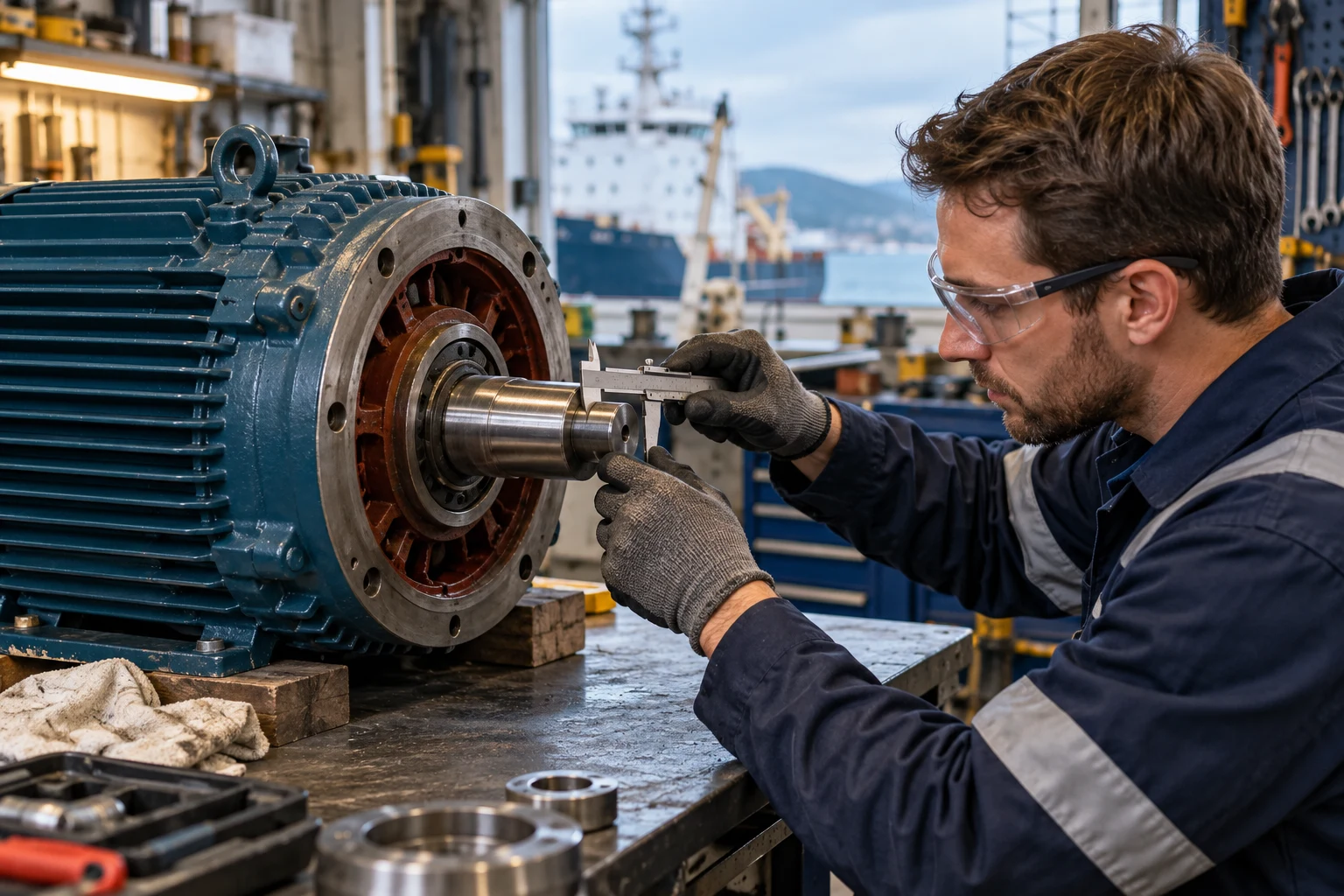
Start with the installation
A motor replacement enquiry should include the original nameplate, maker and model, available datasheets and photographs of the installation. Rated power alone does not establish compatibility.
Check electrical and mechanical interfaces
Review the intended voltage and frequency, the operating speed, the starter or control arrangement and relevant protection requirements. Mechanical checks include shaft dimensions, mounting, flange configuration, coupling arrangements and available space.
Assess the driven equipment
A change in motor speed can affect the machinery it drives. The motor and the pump, fan or other equipment should therefore be assessed as an operating combination. Where the proposal relies on operation at a different frequency, obtain the applicable operating data from the motor maker.
MSACHKL perspective
The fastest quotation is useful only if the equipment can be installed and used. A technically complete enquiry allows supply, repair and alternative replacement routes to be compared on the same basis. Record the agreed specification and any required clarification before dispatch.
Maker guidance puts installation in the same decision
ABB describes installation and commissioning as a planned process covering mechanical and electrical installation, work performed to maker guidance and commissioning documentation. That is a useful reminder that a motor quotation and a complete replacement plan are different deliverables.
For the vessel’s specific equipment, use the applicable maker documentation and the responsible technical team’s requirements. Establish the intended power supply and the driven machinery details before selecting a replacement. Record any assumptions explicitly so they can be checked rather than carried silently into the order.
Compare replacement, repair and an alternative on equal terms
A replacement offer should state the applicable operating data and physical arrangement. A repair offer should state the work included, the parts considered and the proposed checks. An alternative should identify its differences and the information still needed for the client’s review.
As an example, a motor that matches the requested power may have a different shaft or mounting arrangement. The equipment price then represents only part of the decision. Coupling work, installation access, modification requirements and time alongside may affect the overall scope. The example illustrates why a dimensional drawing can be commercially decisive.
Agree the handover requirements before dispatch
Identify which operating data, drawings, nameplate details and records are needed for the installation. Where a maker confirmation is required, obtain it for the intended application rather than assuming a generic product description answers the question.
For planned replacement, reconcile the supply and attendance schedules. For an urgent failure, compare the time needed for repair against replacement availability and the realistic delivery route. The decision should show the technical basis and operational implications of the chosen option.
A practical decision framework
| Decision area | Information to review | Management action |
|---|---|---|
| Electrical interface | Voltage, frequency, current, speed and controls | Confirm operating data for the intended supply. |
| Mechanical interface | Shaft, mounting, flange, coupling and space | Review the installation drawing and dimensions. |
| Execution | Delivery, access, attendance and documentation | Compare the complete replacement or repair scope. |
MSACHKL operational framework. Apply it alongside the vessel’s requirements and relevant maker documentation.
RESEARCH & SOURCE MATERIAL
ABB installation and commissioning ↗Turn the requirement into a plan.
Send your vessel details, equipment information and operational window to discuss supplies or technical support.
Discuss a requirement ↗